DC Appliances for Off-Grid Living: When 12V, 24V, or 48V Loads Make Sense
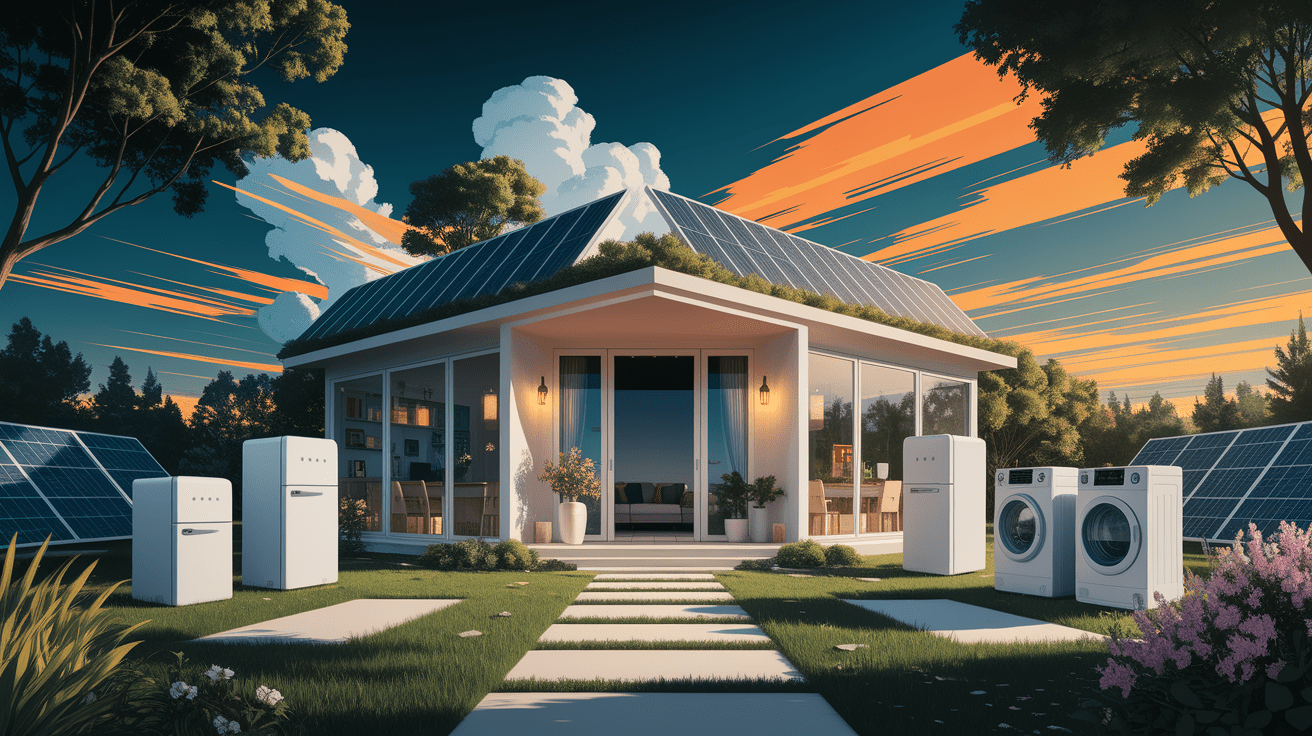
Planning note: DC loads can improve efficiency, but they also require correct voltage, fuse protection, wire sizing, disconnects, and polarity discipline. Do not mix DC circuits casually with standard AC house wiring.
Why DC Appliances Matter Off Grid
Solar panels and batteries are DC devices. Standard household outlets are AC. Every time an inverter converts battery DC into AC, a small amount of energy is lost and the inverter may consume standby power even when loads are small. DC appliances can avoid some conversion losses and keep essential loads running even when the inverter is off.
Best DC Appliance Candidates
- Refrigeration: efficient DC refrigerators and freezers can reduce inverter runtime.
- Lighting: LED DC lighting is simple, efficient, and reliable.
- Water pumps: DC pumps are common in cabins, RVs, and wells with modest flow needs.
- Ventilation fans: small fans pair well with battery systems.
- Electronics charging: USB-C and telecom-style DC distribution can be efficient when designed correctly.
When AC Is Still Better
Large appliances, specialty equipment, and anything requiring standard household compatibility may be better on AC. AC wiring practices are familiar to electricians, appliances are widely available, and service is easier. For many homes, the best design is a hybrid: critical small loads on DC and larger convenience loads on AC.
Choose the Right System Voltage
At the same power level, higher voltage means lower current. A 1,200 W load draws about 100 A at 12 V, 50 A at 24 V, and 25 A at 48 V before losses. High current requires larger wire, careful terminations, and more expensive protection. Small RV systems may use 12 V; larger cabins and homes often benefit from 24 V or 48 V battery architecture.
Wire Size and Voltage Drop
DC circuits are sensitive to voltage drop, especially at 12 V. Long runs to pumps, refrigerators, or outbuildings can waste power and cause nuisance shutdowns. Keep high-current DC runs short, use properly sized conductors, and fuse each circuit close to the source.
Practical Layout
Separate essential DC loads from optional AC loads. Label voltage clearly, use listed distribution equipment, and avoid improvised automotive wiring for permanent buildings. If the system also connects to an inverter, generator, or utility service, design the grounding and bonding approach with a professional.
Sources
Newer: Power Uninterrupted: A Clear Guide to Backup Power System Integration →
Related articles

Empowering Tomorrow: The Role of Education in Sustainable Solar Technology
Discover how solar technology education is transforming our energy landscape through innovative teaching methods, industry partnerships, and policy initiativ...

Harnessing the Sun: Smart Strategies for Agriculture-Solar Integration
Discover how agrivoltaics maximizes land use by combining solar energy with agriculture, boosting farm income while enhancing crop yields, water conservation...
Unlocking Solar Potential: Financing Pathways for Developing Nations
Discover how innovative solar financing mechanisms are helping developing nations overcome investment barriers and unlock their renewable energy potential wi...