MPPT vs PWM Solar Charge Controllers: Which Is Best for Your Battery System?
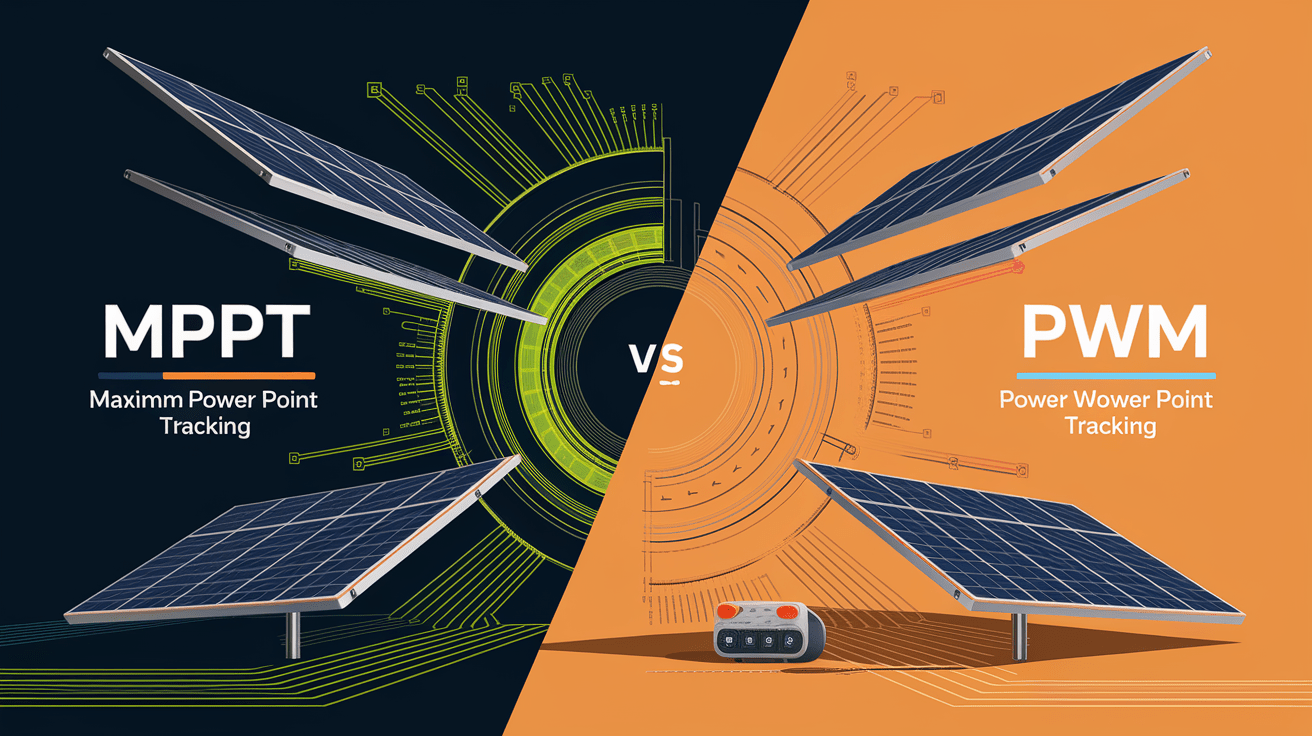
Quick answer: MPPT controllers are usually the better choice for home, cabin, RV, and off-grid systems where panel voltage is higher than battery voltage or weather varies. PWM controllers can still make sense for small, low-cost systems with closely matched panel and battery voltages.
What the Charge Controller Does
A solar charge controller regulates power from PV modules into a battery bank. It prevents overcharging, controls charging stages, and protects equipment from reverse current or unsafe operating conditions. The two common controller types are pulse-width modulation (PWM) and maximum power point tracking (MPPT).
How PWM Works
A PWM controller effectively pulls the panel voltage down toward battery voltage during charging. That simplicity keeps cost low, but it wastes potential energy when the panel’s maximum power voltage is much higher than the battery voltage. PWM works best when the solar module and battery are closely matched, such as a nominal 12 V panel charging a 12 V battery.
How MPPT Works
An MPPT controller converts higher-voltage PV input into the voltage and current the battery needs. It tracks the array’s maximum power point as sunlight and temperature change. This lets you wire panels at higher voltage, reduce current on long wire runs, and recover more energy in cold or variable conditions.
Comparison Table
| Factor | PWM | MPPT |
|---|---|---|
| Cost | Lower | Higher |
| Efficiency | Best when voltages match | Usually higher across conditions |
| Array voltage flexibility | Limited | Much better |
| Cold weather performance | Can waste extra panel voltage | Captures more usable power |
| Best for | Small budget systems | Homes, cabins, RVs, larger off-grid systems |
When PWM Still Makes Sense
Choose PWM for a small shed, trickle charger, simple lighting system, or very tight budget project where the PV module voltage matches the battery and wiring distances are short. It is also easier to troubleshoot because there are fewer conversion variables.
When MPPT Is Worth It
Choose MPPT when the array is larger, wire runs are long, temperatures swing widely, or the panel voltage is significantly above the battery voltage. MPPT is also preferred for 24 V and 48 V battery banks, lithium systems, and designs where every watt matters.
Sizing Tips
- Confirm the controller’s maximum PV open-circuit voltage at the coldest expected temperature.
- Match the controller to battery chemistry and voltage.
- Size output current for the array’s expected charging current with manufacturer safety margins.
- Use proper fuses, disconnects, and conductor sizes.
Sources
Newer: Cool & Hot: Mastering Battery Bank Temperature Control →
Related articles

Empowering Tomorrow: The Role of Education in Sustainable Solar Technology
Discover how solar technology education is transforming our energy landscape through innovative teaching methods, industry partnerships, and policy initiativ...

Harnessing the Sun: Smart Strategies for Agriculture-Solar Integration
Discover how agrivoltaics maximizes land use by combining solar energy with agriculture, boosting farm income while enhancing crop yields, water conservation...

Unlocking Solar Potential: Financing Pathways for Developing Nations
Discover how innovative solar financing mechanisms are helping developing nations overcome investment barriers and unlock their renewable energy potential wi...