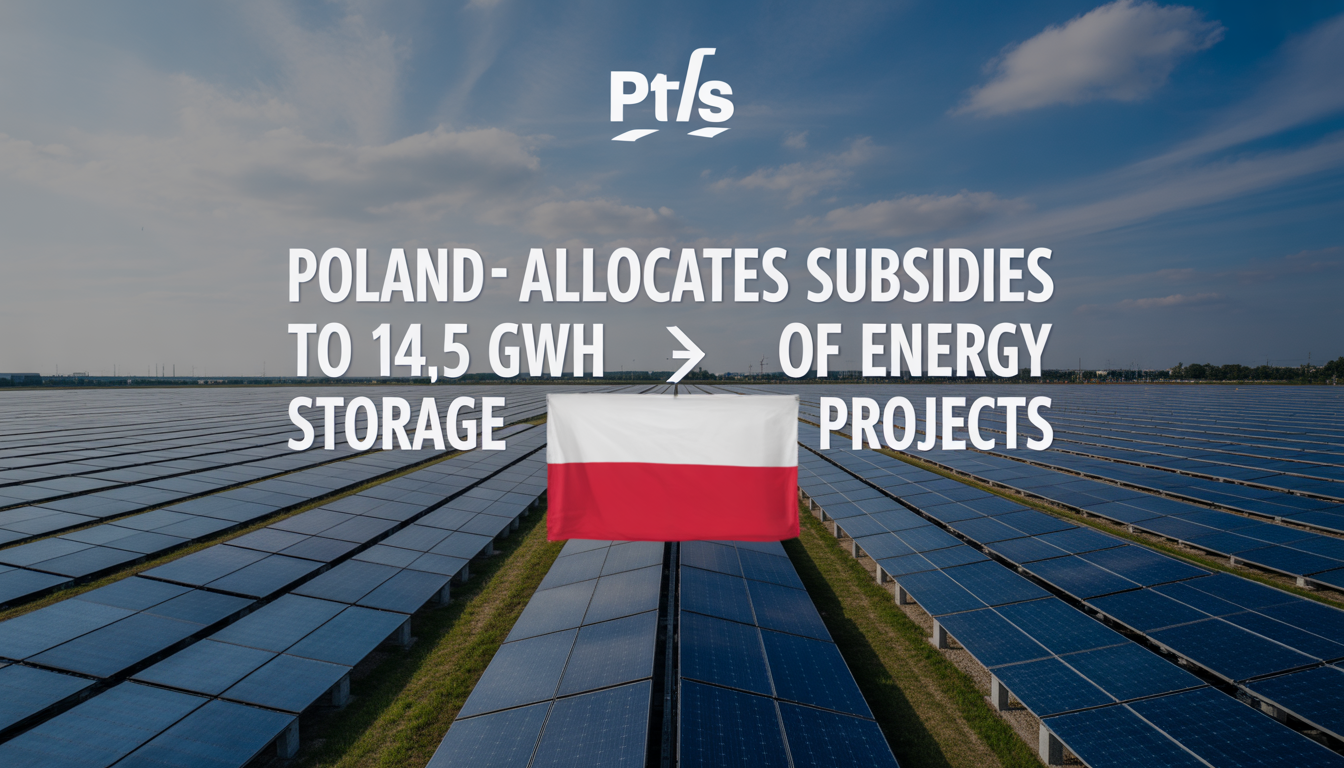
Poland Powers Up: $1 Billion in Subsidies for 14.5 Gwh Energy Storage Projects
Strategic Investment in Energy Storage
Poland is making a significant leap in its renewable energy infrastructure with a recent announcement from the national environmental fund (NFOŚiGW). The fund has allocated public support for 172 large-scale battery energy storage system (BESS) projects, totaling an impressive 14.5 GWh of energy capacity and a rated power close to 3.9 GW. This initiative is part of a broader PLN 4.15 billion program designed to enhance the country's energy storage capabilities and facilitate the integration of renewable energy sources.
Enhancing Grid Flexibility and Security
The new subsidies are expected to play a crucial role in increasing grid flexibility and security, particularly as Poland shifts away from coal-fired generation. By investing in large-scale battery systems, the government aims to:
- Provide balancing capacity to manage fluctuations in renewable energy generation.
- Reduce the curtailment of excess renewable energy.
- Enhance overall energy supply security during the transition to cleaner energy sources.
These energy storage systems will deliver essential services such as frequency response, peak shaving, reserve capacity, and energy shifting, crucial for integrating higher amounts of wind and solar power into the grid.
Timelines and Technical Considerations
With a construction deadline set for the end of 2028, developers will need to expedite project timelines amidst evolving regulatory landscapes. The awarded capacity of 14.5 GWh comprises a mix of short-duration batteries (1–4 hours) for ancillary services and longer-duration installations aimed at energy shifting. The combined nameplate power of approximately 3.9 GW indicates a focus on high-power, short-duration services, essential for participating in day-ahead and balancing markets.
Challenges Ahead for Developers
While the subsidy significantly mitigates revenue risk, developers still face considerable challenges. The legal landscape for utility-scale BESS in Poland involves navigating complex permitting processes and environmental assessments. The need for zoning approvals and compliance with evolving regulations poses a significant hurdle for timely project completion. As highlighted by legal advisories, these factors will be critical in determining whether developers can meet the aggressive construction timeline by the end of 2028.
Market Implications and Supply Chain Dynamics
This large-scale procurement of battery storage will inevitably impact the supply chain, particularly concerning the demand for battery cells, inverters, and other key components. As competition for these materials increases, developers are urged to secure long-lead components and engineering, procurement, and construction (EPC) contractors early in the process. The subsidy also presents an opportunity to stimulate local supply chain activity, provided it is aligned with supportive industrial policies.
Conclusion: A Step Towards a Sustainable Future
The Polish government's commitment to battery energy storage represents a pivotal moment in the country's energy transition. By bolstering the storage capacity, Poland is not only enhancing grid stability and security but also positioning itself as a leader in the European renewable energy landscape. As the industry evolves, the successful implementation of these projects will hinge on effective collaboration among developers, suppliers, and regulatory bodies.
Newer: Empowering Minds: The Rise of Solar Energy Education →
Related articles
Transforming Fallowed Fields: California Water District's Ambitious Solar Plans
Innovative Energy Production on Unproductive Lands The Westlands Water District, the largest irrigation district in the United States, is embarking on a grou...

India's New 20% Domestic Content Rule: a Game Changer for Battery Storage Funding
The Indian government has set a transformative benchmark for battery energy storage projects with the introduction of a 20% domestic content rule under its V...

Rei Co-Op Champions Renewable Energy Initiatives Across the Nation
REI Co-op, a leader in outdoor recreation and sustainability, is stepping up its commitment to renewable energy by supporting numerous projects nationwide. T...