Market Trends
Navigating the Disconnect: Understanding Residential Battery Adoption Motivations
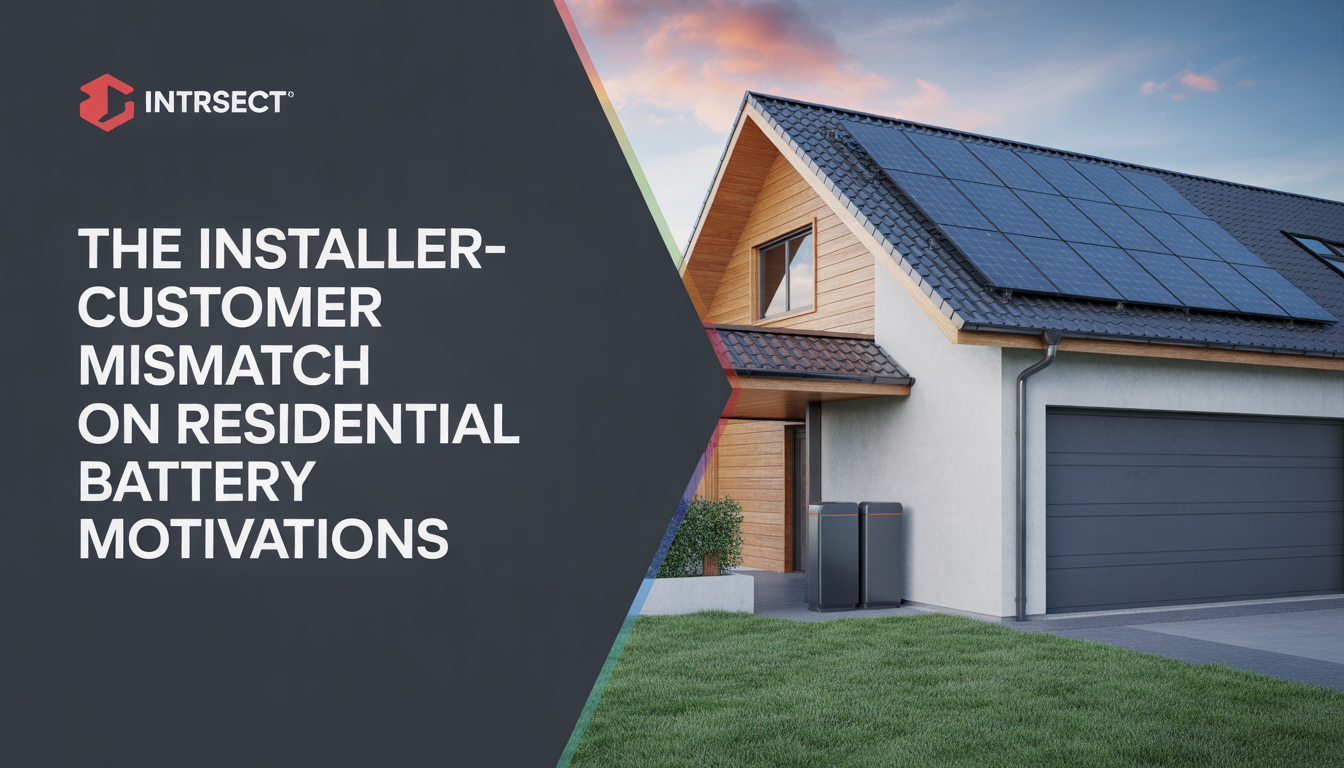
Introduction: Bridging the Gap Between Installers and Homeowners
The residential battery storage market is on an impressive growth trajectory, projected to reach a staggering $12.4 billion by 2025. This expansion is primarily fueled by the integration of solar photovoltaic (PV) systems, declining battery costs, and an increasing demand for energy independence. However, a critical disconnect exists between what homeowners prioritize when adopting residential batteries and the assumptions made by installers regarding customer motivations.Key Motivations for Homeowners
Homeowners are increasingly turning to residential battery systems for several practical reasons:- Cost Savings: Many customers prioritize financial benefits, including energy bill reductions through solar self-consumption and time-of-use arbitrage.
- Backup Power: In regions prone to outages, such as California, the ability to maintain power during grid failures is a significant consideration.
- Energy Independence: Consumers are increasingly seeking greater control over their energy usage and sources.
- Sustainability Concerns: Eco-conscious homeowners are drawn to longer-life batteries and materials that are recyclable.
Installer Perspectives and Misalignments
Installers frequently emphasize resilience and backup power in their sales pitches, driven by a belief that these factors are the primary concerns of potential customers. However, surveys reveal a different story; many homeowners prioritize savings over security. This mismatch can hinder adoption rates if installers fail to align their messaging with the actual motivations of their clients. This disconnect may be particularly detrimental in regions facing frequent grid issues. As installers focus on resilience, they may overlook the potential for improved return on investment (ROI) that comes from energy arbitrage—an aspect that many homeowners value highly.Technological Innovations Driving Adoption
The landscape of residential battery technology is evolving with notable advancements, including:- Solid-State Batteries: Offering 30-50% higher energy density and improved safety features, solid-state batteries are paving the way for more efficient energy storage solutions.
- Silicon-Carbon Anodes: These innovations allow for more compact systems without sacrificing performance.
- Modular Designs: Systems like the Tesla Powerwall offer scalability, making them appealing for various household needs.
Policy Influences and Future Outlook
Government policies, particularly in the U.S., have played a pivotal role in the growth of residential battery storage. The Investment Tax Credit (ITC) has significantly boosted installations, but potential changes in policy could impact future growth rates. Analysts predict that the removal of certain tax incentives could lead to a slowdown of approximately 6% in installations by 2026. Regionally, states like California and Texas continue to lead adoption efforts, bolstered by aggressive renewable energy targets and supportive incentives. The future of the residential battery market hinges on maintaining a steady pace of innovation, fostering domestic manufacturing, and enhancing participation in virtual power plants (VPPs).Conclusion: Aligning Strategies for Better Outcomes
To maximize the potential of the residential battery market, installers must re-evaluate their sales strategies to better align with the motivations of homeowners. By focusing on cost savings, energy independence, and practical benefits, installers can bridge the gap between their perspectives and the priorities of their clients. In this rapidly evolving market, understanding and addressing customer motivations will be key to driving adoption and ultimately realizing the full benefits of residential battery storage technology.← Older: New Jersey's Agrivoltaics Initiative: a Game Changer for Sustainable F
Newer: Navigating the Future: Scenario Modeling as a Key to Clean Energy Tran →
Newer: Navigating the Future: Scenario Modeling as a Key to Clean Energy Tran →
Related articles
Market Trends
New Analysis Shows More US Consumers Are Falling Behind on Their Utility Bills
America’s household energy burden is climbing — and the latest data indicates that millions are now slipping into dangerous territory with unpaid utility bil...

Market Trends
Abb Finalizes Acquisition of Gamesa Electric
ABB strengthens renewable energy conversion portfolio with strategic acquisition In a decisive move to expand its footprint in renewable energy technology, S...

Market Trends
Bangladesh Approves 220 Mw Solar Project, Its Largest to Date
Strategic leap in Bangladesh’s renewable energy capacity Bangladesh is set to make a decisive stride in its clean energy transition with the approval of a 22...